

Explore Life and You Find Change, Explore Death and You Find Opportunity


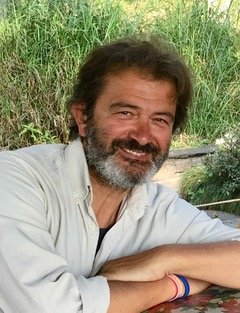
Featuring: Bruno Rizzi
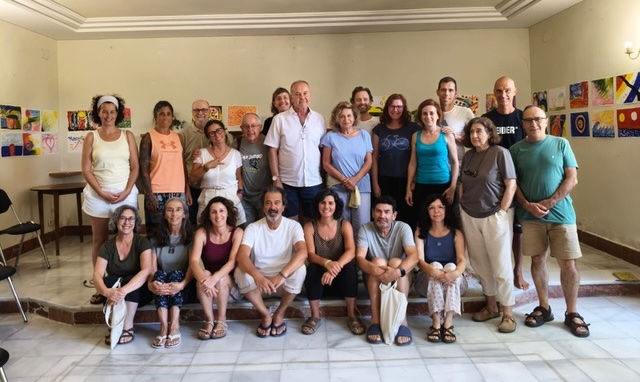
At the Foundation for Developing Compassion and Wisdom (FDCW), we support learning experiences that help people reflect on the big questions of life with courage, clarity, and compassion. One such experience took place in early July, when 24 participants gathered in the hills near Alicante for a retreat dedicated to one of life’s deepest themes: to explore death and impermanence.
Organised by the Nagarjuna Buddhist Centre in Alicante and guided by Bruno Rizzi, the retreat offered a profound space for reflection, insight, and inner growth. The venue, a Christian retreat centre with its simple, cool rooms, provided both comfort and quiet, creating a supportive setting for turning inward. Silence was observed between sessions, allowing participants to absorb and reflect on what was being explored together.
Bruno’s programme, inspired by Universal Education and Lama Thubten Yeshe’s vision, encouraged participants not to shy away from death but to bring it into the heart of daily awareness. Through guided meditations, group dialogues, and analytical exercises, participants discovered that reflecting on death is not an exercise in fear, but a way of opening to life more fully.
One participant shared:
“The retreat… was a very profound experience, as it made me reflect on my values and priorities in life. I also understood the close relationship between life and death and how our life is a preparation for the end, as well as the importance of ethics, values supported by the two great wings of wisdom and compassion.
” — RP
The sessions were described as well-structured and progressively meaningful, with morning and afternoon meditations providing stability and depth. “As the retreat progressed, everything took on greater meaning and understanding,” another participant reflected, praising Bruno’s humble, compassionate, and empathetic guidance.
Drawing from palliative care, neuroscience, philosophy, and spiritual traditions such as Buddhism, the retreat explored how awareness of impermanence can bring clarity and appreciation for life. Participants discovered that keeping death in mind is not morbid, but liberating, it helps us live with greater authenticity, honesty, and warmth.
“With his teachings on how Tibetan Buddhism understands the process of dying, his guided meditations and his group and individual dynamics, he has helped us to foster active listening, without judgement, and presence with wisdom and compassion.
Silence provides that space to allow you to become aware of all the external and internal noise and let those unheard and/or repressed emotions or thoughts surface.” — ChT
What might appear at first to be a heavy subject revealed itself to be filled with vitality and humour. Sharing reflections on death together brought honesty, connection, and even joy. Many found this collective openness to be one of the most moving parts of the experience.
“I am someone who has had very little contact with Buddhism. I am very curious about it, and I am also curious about the subject of death… I wanted to deepen my understanding, to explore the Buddhist worldview a little, to reflect on suffering. In this retreat, I have fulfilled my wishes. And, unexpectedly, I also gained an experience of letting go and calm.
No matter what your beliefs are, if you have any, or your convictions, I find the experience so interesting that I think it’s worth it if you’re curious, if you let yourself go. I’ll just reveal that in the end the circle closes. It’s beautiful. It’s powerful.” — NC
Participants also spoke about the practical impact of the retreat: normalising death in everyday life, learning to stay calm in its face, clarifying one’s values, and understanding that ethical foundations are essential both for living and for dying well.
“The exercise ‘please tell me a fear you have about death’ struck me as the ‘STAR’ exercise in terms of being a direct tool for personal investigation and genuine communication with others at the same time.” — MM
For many, the retreat became a moment of gratitude, for life, for the opportunity to reflect, and for the community that made it possible.
“I am grateful to Bruno for his wisdom and compassion, to Kiko for his attentive translation, to Jessica and the Nagarjuna Centre for organising this much-needed event, and to all my fellow participants for their generosity in sharing such an intimate and profound world.” — ChT
Perhaps the greatest reminder came in the recognition of our current good fortune: to be alive, with the capacity to reflect on life’s meaning and the guidance of experienced teachers. As Lama Thubten Yeshe often said, awareness of impermanence is not an end, it is a doorway to living wisely and compassionately.
This retreat was a vivid reminder of just how true that is.
At FDCW, we are grateful to the Nagarjuna Buddhist Centre in Alicante and Bruno Rizzi for offering such a meaningful experience inspired by Universal Education for Compassion and Wisdom. Reflections like these remind us that understanding impermanence can help us appreciate the preciousness of life, strengthen our values, and nurture compassion for ourselves and others.
Interested in taking part in a 16 Guidelines course?
Find upcoming trainings and retreats on our events calendar

Foundation for Developing Compassion and Wisdom (FDCW)
At FDCW, we are committed to a more compassionate, wiser world. We provide resources, courses and training to develop qualities such as kindness, patience and honesty – qualities that are essential for meeting the challenges of the world we all share.
The Foundation for Developing Compassion and Wisdom (FDCW) was established as a global charity based in London in 2005. Since then, we have provided secular training, programmes and resources across many sectors of society – schools, universities, hospices, workplaces, healthcare, youth groups and community centres. Our courses have reached thousands of people across the world through our dedicated and growing network of facilitators in more than 20 countries.
Support our Work
As a non-profit organization, FDCW relies on donations like yours to continue producing valuable resources and hosting events. You can support us by sharing our newsletter, following us on social media, and making a donation. Every contribution, big or small, helps us in our efforts and we truly appreciate it.


