Empathy Circles and the 16 Guidelines



Featuring: Janna Weiss
Empathy is something many of us value, but it isn’t always easy to put into practice, especially when conversations become difficult. One of the ways 16 Guidelines Facilitators Janna Weiss and Maria Trottmann support this practice is through Empathy Circles with Conversations that Matter, which appear regularly on our events calendar.
To learn more, we spoke with Janna and Maria about what Empathy Circles are, why they matter, and how the 16 Guidelines for Life can help create deeper, more compassionate conversations.
What are Empathy Circles?
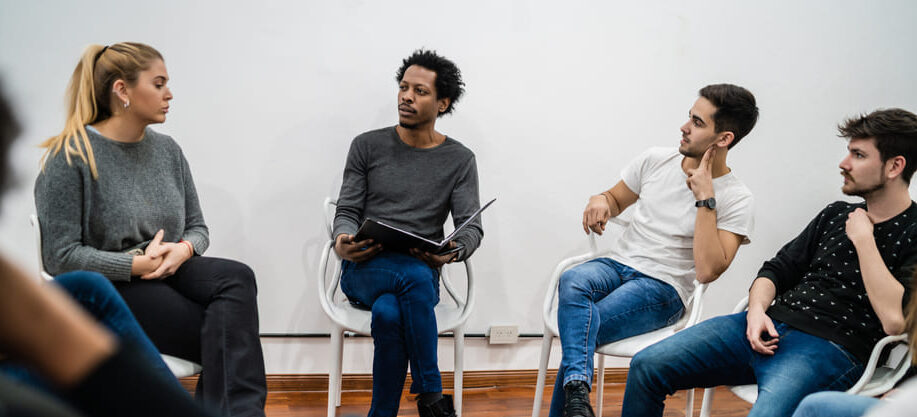
Developed by Edwin Rutsch, founder and director of The Empathy Center, and rooted in the humanistic psychology of Carl Rogers, the practice is a structured dialogue process designed to deepen empathy and nurture an empathic way of being. Built on four core values – empathy, mutuality, openness, and caring, the circle provides a clear framework for respectful, equal participation. Participants take turns speaking and listening. While one person shares, the active listener reflects back what they’ve heard without giving advice, interrupting, or debating. The result is a rare conversational rhythm where every speaker feels fully seen and understood.
Who are these Sessions for?
These Online Empathy Circles are for people of all ages, backgrounds and ideas, who are looking for practical tools to create positive transformation in their homes, individual lives, relationships, community, or workplace
What Makes These Empathy Circles Different?
While Empathy Circles exist in many forms, the sessions hosted by Janna and Maria are intentionally distinct. Rather than open-ended sharing, these circles are anchored in the Universal Human Values that form the foundation of the 16 Guidelines for Life using the FDCW resource: Conversations That Matter. This resource provides structured reflection prompts and value-centred themes that transform the circle from a simple listening exercise into a purposeful exploration of how universal values show up in everyday life. Participants don’t just practice active listening; they actively engage with the ethical and relational frameworks that shape how we treat ourselves and others.

We asked Janna and Maria a few questions to shed light on how the circles work…
If you were inviting someone new to join an empathy circle, what would you want them to know or feel before coming?
Maria: The structure is very clear and easy to learn. All you need is curiosity and openness.
Janna: It may feel awkward at first, but there’s no pressure to speak. You can watch for a while until you feel ready to take a turn listening.
Active listening is an invaluable life skill that’s especially helpful in difficult conversations. But active listening is really only available to us when we need it the most when we practice it regularly. I’m very grateful for this opportunity to practice active listening.
Empathy Circles are a “free speech” and everyone is welcome.
Also, sometimes it’s not clear to people who are coming from outside the 16 Guidelines and Empathy Circles communities that these are really two separate practices that we’re combining in these Empathy Circles.
The 16 Human Dharmas or 16 Social Values that 7th century Tibetan King Songtsen Gampo wrote, and that the 16 Guidelines are based on, were helpful in transforming Tibet from a violent to a peaceful compassionate society. By combining the 16 Guidelines with Empathy Circles, I believe we are similarly contributing to transforming our current human society to a more peaceful one.”
What stands out most for you when you reflect on these empathy circles?
Maria: It is amazing how this simple, structured dialogue process makes mutuality and understanding possible, even among strangers with different perspectives. I am not naturally a good communicator or someone who connects easily with other people. (I work as a data scientist, we’re not famous for our social skills). Thanks to the Empathy Circle process, listening without judgement and speaking clearly feel like skills I can learn. This is liberating and inspiring.”
Janna: I rejoice that we’re practicing the Guidelines together. The Empathy Circle practice itself embodies the Guidelines; it’s a mutual practice of humility, patience, contentment, joy, courage, respect, kindness, generosity, service, and more, all wrapped into 4- or 5-minute speaking and listening turns.
It’s wonderful that one can also say whatever one wants when it’s your turn to speak, you can talk about anything. So it brought me joy when the 2-3 minutes worth of advice for a problem that someone shared one week prior, led to a wonderful solution to an ongoing problem. We benefit and help each other in completely expected, unexpected, ways.
People really value being and feeling fully seen, heard, and acknowledged. And it’s a joy to be able to offer the same for others. In ordinary life situations, I encounter people who feel frustrated when someone interrupts them. That happens to me too, from both ends, as an eager interrupter and when I’m interrupted and unable to complete a sentence or thought. Although not billed as therapy, the Empathy Circle is a healing communication practice.
The Empathy Circle does take a little practice, and it can feel contrived and awkward at first, but I think it’s worthwhile sticking around until it becomes “second nature.”
For me, one thing I value and enjoy very much in general about Empathy Circles, is the freshness and present-momentness of the conversation. I never know what I will say when it’s my turn to speak, and of course whatever anyone else shares is a complete surprise. So it’s like opening endless babushkas or Christmas presents. Every moment is new and engaging. I love Empathy Circles.
How did the diversity of participants, across countries, cultures, and backgrounds, shape the experience of the circles?
Maria: Participants came from many different countries, and had diverse backgrounds including political campaigners, IT managers, school teachers, and counselors. They brought many different interests regarding the 16 Guidelines, e.g., professional, philosophical, personal growth, which made every session rich, different and engaging. It also shows how the 16 Guidelines are a practical toolkit for humans across a wide range of situations.
Janna: If I remember well, people have come from Ireland, United Kingdom, Switzerland, Brazil (via Switzerland), The Netherlands, Poland (via the UK), Palestine, Israel, Kenya, USA: Arizona, California, Delaware, Maryland, Massachusetts, New Jersey, New York, Texas.
The Empathy Circles with the 16 Guidelines are a practice for realisation or celebration and appreciation of our common humanity. All are welcome, and we all take turns listening and speaking to one another. The four core values of The Empathy Centre and the Empathy Circle practice are: mutuality, openness, care, and empathy.
What did you notice participants gaining or offering through these circles?
Maria: In an Empathy Circle, one person speaks and an active listener reflects every point without any judgement, advice, interruption or debate. This allows speakers to pause, focus, and gain clarity on their own perspective. Tranquility, focus and clarity seem like something that people are often missing in daily life. Being heard without judgement also fosters connection and allows participants to be less judgmental about themselves and others.
Janna: No worries! When it’s your turn to speak, you can still do “all the above”: judge, give advice, disagree, etc.! 🙂 You just need to refrain for a few minutes, while you’re the listener, and your turn is next. Empathy Circles have made me a better listener, and a more thoughtful speaker, and many participants find that is true for them as well.
Ready to Listen and Be Heard?
Thank you to Janna and Maria for sharing their thoughtful reflections on how Empathy Circles and the 16 Guidelines can deepen our everyday connections. If you feel inspired to join a new group of session called Empathy Circles with Conversations that Matter: Gaining Clarity and Mutual Understanding over 4 Sundays from August 2 to August 23.
If you want to know more about the Empathy Circles, please make sure to check Maria and Janna’s presentation on the 2026 Empathy Summit: The Empathy Circle with Basic Human Values | 16 Guidelines.
Watch: How To Take Part in a Basic Empathy Circle ~ 9 minutes

Foundation for Developing Compassion and Wisdom (FDCW)
At FDCW, we are committed to a more compassionate, wiser world. We provide resources, courses and training to develop qualities such as kindness, patience and honesty – qualities that are essential for meeting the challenges of the world we all share.
The Foundation for Developing Compassion and Wisdom (FDCW) was established as a global charity based in London in 2005. Since then, we have provided secular training, programmes and resources across many sectors of society – schools, universities, hospices, workplaces, healthcare, youth groups and community centres. Our courses have reached thousands of people across the world through our dedicated and growing network of facilitators in more than 20 countries.
Support our Work
As a non-profit organisation, FDCW relies on donations like yours to continue producing valuable resources and hosting events. You can support us by sharing our newsletter, following us on social media, and making a donation. Every contribution, big or small, helps us in our efforts and we truly appreciate it.