Understanding Anger: How to Manage Anger Before it Manages You


At the Foundation for Developing Compassion and Wisdom (FDCW), we believe that understanding ourselves is one of the most important steps towards living a happier, more meaningful life. As our shadow side series has now come to an end, we are now turning our attention to Understanding Emotions.
Our emotions influence how we think, act, relate to others and find meaning in the challenges we face each day. Yet many of us were never taught how emotions arise, what effects they have on us, or how to work with them in a healthy and constructive way. In this new series we will explore some of the emotions that shape our lives, from anger and anxiety to joy, gratitude and compassion. Rather than being ruled by emotions, suppressing them, or using them to justify unhelpful actions, we will look at how to understand them clearly and respond with greater awareness. We begin with how to manage anger.
Anger Is Powerful – But Is It Helpful?
Most of us know what anger feels like. Often signs of anger can arise when someone treats us unfairly, when things do not go according to plan, or when we witness behaviour that seems harmful or unjust. Sometimes it appears as mild irritation; at other times it can feel overwhelming, taking over our thoughts, words and actions.
Because anger often arises in response to something that feels wrong, it can seem justified. We may believe that our anger gives us strength or helps us stand up for what matters. Yet if we pause and reflect on our own experience, we might ask: how often has anger improved a difficult situation?
The 16 Guidelines remind us that while we cannot always control what happens around us, we can learn to work with our reactions. This is where the Guideline of Patience can help. If the aim is to manage anger before it manages us, we need a way of creating space between the emotion and our response. Patience provides that space. It is not about ignoring problems or becoming passive. Rather, it is the ability to remain calm and clear-minded when facing difficulties, allowing us to choose our response rather than being driven by anger.
“Many people think that to be patient is a sign of weakness. I think that is a mistake. It is anger that is a sign of weakness.”
– H. H. the Dalai Lama
This does not mean we should ignore injustice or accept harmful behaviour. Rather, it invites us to consider whether anger itself helps us address those situations effectively. Throughout this article, we will explore what lies beneath anger and how we can work with it before it takes control of our minds and actions.

What’s Happening Beneath the Anger?
Anger can feel immediate and overwhelming. One moment we are calm, the next we are replaying a conversation in our head, feeling our muscles tense, our heart rate increase, or preparing to defend ourselves. Because anger triggers strong emotions and feels so powerful, it is easy to assume that it is caused entirely by whatever is happening around us.
The 16 Guidelines offer a different perspective. They suggest that behind every emotion lies a thought, although we are not always aware of it. Events happen quickly, and our minds react just as quickly. By the time we notice our anger, the thoughts that triggered it may already have passed beneath our awareness.
The thoughts behind anger often sound familiar:
- “This is unfair.”
- “I’m not being respected.”
- “This shouldn’t be happening.”
- “I’m going to get hurt.”
When these thoughts take hold, anger can follow. Yet if we look a little more closely, we may discover that anger is not the whole story.
Modern psychology often describes anger as a secondary emotion. In other words, it can be a reaction to deeper feelings that are harder to acknowledge. Beneath anger, we may find fear, disappointment, sadness, embarrassment, shame or a sense of helplessness. For example, anger about criticism may hide a fear of rejection. Anger about being ignored may arise from feeling hurt or unimportant. Anger about change may be rooted in uncertainty or anxiety.
When we become curious about what lies beneath our anger, we gain a greater understanding of ourselves and more choice about how we respond.
Further Exploration: The Atlas of Emotions
If you would like to explore anger and other emotions in more depth, the Atlas of Emotions is an interactive online resource created by Paul and Eve Ekman at the request of His Holiness the Dalai Lama. It explores how emotions arise, intensify and influence our behaviour, offering practical tools for developing greater emotional awareness.
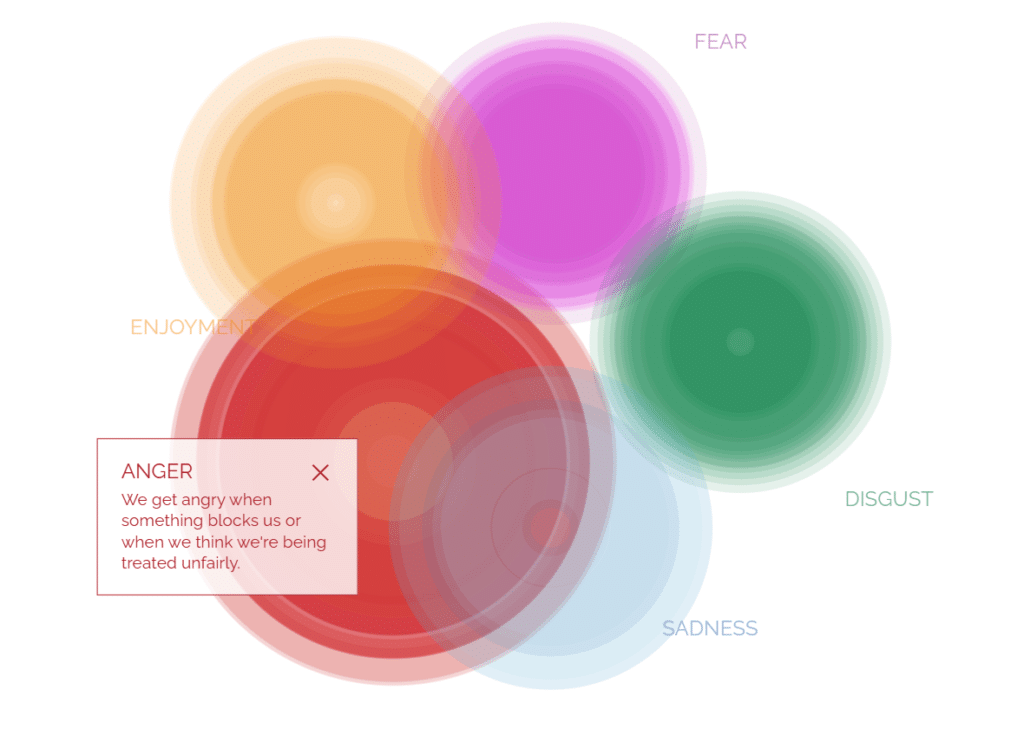
Why Anger Limits Us
Anger often feels powerful in the moment, but its effects are rarely beneficial. When we are angry, our attention narrows and our perspective can become distorted. We may make assumptions, speak harshly or act in ways that create further difficulties. It disturbs our peace of mind and makes it harder to think clearly. In contrast, a calm mind is more able to assess a situation, consider different perspectives and respond effectively.
Anger affects more than our state of mind, studies show it can cause us physical harm. A large review of prospective studies published in the Journal of the American College of Cardiology found that anger and hostility were associated with an increased risk of coronary heart disease and poorer outcomes for people who already had heart conditions. The researchers concluded that persistent patterns of anger and hostility may have a measurable impact on physical health as well as emotional wellbeing.
When we are consumed by anger, we rarely feel settled or secure. Instead, anger can leave us tense, defensive and disconnected from others. Over time, repeated anger can become a habit, shaping how we interpret situations and how quickly we react. The more we understand its effects, the more motivated we become to pause, step back and choose a different response.
The encouraging news is that anger does not have to define us. Like any habit of mind, it can be understood and gradually changed. Every time we pause before reacting, question our assumptions or choose a more constructive response, we begin to weaken its grip and create the conditions for greater peace of mind.
Patience: The Antidote to Anger
If anger narrows our perspective and disturbs our peace of mind, what is the alternative?
The 16 Guidelines point to patience. Yet patience is often misunderstood. Many people associate it with passivity, weakness or simply putting up with difficult situations. In reality, patience is something much more powerful. It is the ability to remain calm, balanced and clear-minded when faced with challenges, setbacks or difficult people. Patience does not mean ignoring problems or allowing harmful behaviour to continue unchecked. Nor does it mean suppressing our emotions and pretending everything is fine. Instead, patience creates the space we need to respond wisely. It helps us avoid being swept away by strong reactions and gives us the freedom to choose our next action more carefully.
Imagine receiving a critical email at work. An angry reaction might lead to an immediate reply that damages a relationship or creates further conflict. A patient response does not mean doing nothing. It means taking a moment to pause, reflect and decide what would be most helpful before acting. Practising patience reminds us that we always have a choice in how we respond. While we cannot control every situation, we can learn to work with our minds. Over time, patience becomes a form of inner strength that protects us from being controlled by our circumstances.
One reason patience is so effective is that it allows us to see a wider picture. When we are angry, we tend to focus on what is wrong. When we are patient, we are more able to consider other perspectives, recognise the pressures others may be facing and identify solutions that might otherwise be overlooked. Patience is not something we either have or do not have. Like any skill, it can be developed through practice. Each time we choose to pause before reacting, listen before speaking or question an assumption, we strengthen our ability to respond with greater awareness.
The encouraging news is that even small moments of patience can have a significant impact. They help us protect our peace of mind, strengthen our relationships and create the conditions for wiser choices. In this way, patience is not simply the absence of anger. It is a positive quality that helps us live with greater resilience, compassion and wisdom.
How to Manage Anger Effectively
Managing anger does not mean suppressing it or pretending it is not there. It means recognising it as it begins to arise and finding ways to diffuse your anger before it gains momentum. The more we understand the causes of anger, the more able we become to reduce its influence and cultivate qualities such as patience, compassion and understanding.
The following approaches can help.
Pause Before Reacting
When anger takes hold, our first impulse is often to act immediately. We want to send the email, make the comment or prove our point. Yet some of our biggest regrets come from reacting in the heat of the moment. A simple pause can make a remarkable difference. Using some relaxation techniques such as taking a few slow breaths, going for a short walk or allowing ourselves time and breathing space before responding can help create the space needed for wiser choices.
Identify the Thought Behind the Emotion
When anger arises, it can be helpful to ask:
- What am I telling myself about this situation?
- What expectation has not been met?
- What am I afraid might happen?
Understanding the thoughts behind anger often reduces its intensity and helps us see the situation more clearly.
Look for What Matters Most
Sometimes anger points towards something we care deeply about. Rather than staying focused on the anger itself, ask:
- What value feels threatened?
- What outcome am I hoping for?
- What positive action could improve this situation?
This can help transform anger into determination, courage or constructive action.
Consider Another Perspective
When we are angry, it is easy to assume we know why someone acted as they did. Yet we rarely know the whole story. Taking time to consider another perspective does not mean agreeing with someone’s behaviour. It simply helps us respond with greater understanding and reduces the likelihood of making assumptions that fuel further anger.
Choose a Helpful Response
The final question is perhaps the most important:
What response is most likely to improve this situation?
Sometimes the answer may be patience. Sometimes it may be an honest conversation, an act of forgiveness, a clear boundary or courageous action to address a problem. The key is to ensure that our actions are guided by wisdom rather than anger itself.
Mindfulness Techniques
Mindfulness techniques can be very helpful to help us examine and overcome our anger. For instance try this Guided Meditation: Working with Emotions from the FDCW website to help you become more aware of your emotions and respond to them with greater clarity and compassion.You can find more Guided meditations here.
You may also be interested in following this self-study Course Building Inner Strength: Core Values for a Happy Life which is an introduction to the 16 Guidelines and the practical skills that help us develop resilience, compassion and wisdom in everyday life.
Reflecting Through Meditation
If you have experience of meditation, you may find it helpful to explore anger through analytical reflection.
Think of a recent occasion when you became angry and reacted from that state of mind. Take some time to reflect on the experience:
- What triggered the anger?
- What thoughts were present at the time?
- How did the anger affect your words or actions?
- What impact did it have on you and those around you?
- Did it help resolve the situation, or did it create further difficulties?
Once you have reflected on what happened, consider how you might have responded differently. If you had paused, applied patience or stepped away from the situation for a short time, what might have been different? Would the outcome have been more beneficial for yourself or others?
This kind of reflection is not about judging ourselves or dwelling on past mistakes. Rather, it helps us learn from experience. By repeatedly examining the causes and effects of anger, we strengthen our determination to respond differently in the future. Over time, we become more able to recognise anger as it arises and choose a response that is guided by patience, understanding and wisdom.
Sometimes the wisest response is simply to walk away, giving ourselves the time and space needed for the intensity of the emotion to settle before taking action.
If you are a group facilitator, teacher, coach or anyone supporting others in developing more positive states of mind, you may be interested in the 16 Guidelines Meditations Course. This collection of guided meditations is designed to support the development of the 16 Guidelines and encourage deeper personal reflection, helping participants cultivate qualities such as patience, kindness, contentment and wisdom.
Helping Children and Teenagers Manage Anger
Young people experience frustration, disappointment and anger just as adults do, but they are often still learning how to recognise and manage strong emotions. Encouraging children and teenagers to pause, reflect on their thoughts and consider different responses can help them develop emotional awareness and resilience from an early age.
FDCW offers resources designed specifically for young people, including the 16G Happy Toolbox for Kids and 16 to Live By for Teens, which explore practical ways to develop positive habits of mind and navigate life’s challenges with greater confidence and understanding. A full list of resources can be found here.
Closing Thoughts
Anger is one of the most powerful emotions we experience, yet it does not have to control us. By understanding the thoughts that fuel anger, recognising its effects and learning to respond with greater awareness, we can gradually reduce its influence in our lives.
This does not happen overnight. Like any habit of mind, anger takes time to understand and transform. Each time we pause before reacting, question an assumption or choose a more constructive response, we strengthen our ability to meet life’s challenges with wisdom and compassion.
The goal is not simply to manage anger, but to develop the inner qualities that make anger less likely to arise and less likely to take hold when it does. In doing so, we create greater peace of mind for ourselves and contribute to a more compassionate world.

Foundation for Developing Compassion and Wisdom (FDCW)
We provide resources, courses and training to develop qualities such as kindness, patience and honesty – qualities that are essential for meeting the challenges of the world we all share.
The Foundation for Developing Compassion and Wisdom (FDCW) was established as a global charity based in London in 2005. Since then, we have provided secular training, programmes and resources across many sectors of society – schools, universities, hospices, workplaces, healthcare, youth groups and community centres. Our courses have reached thousands of people across the world through our dedicated and growing network of facilitators in more than 20 countries.